Let's name the thing nobody says out loud
Your body stops working when they're watching. Not because something's wrong with you. Not because you don't love them. Because the moment you feel observed, judged, or responsible for their satisfaction, your nervous system flips into performance mode instead of pleasure mode. These two states cannot coexist.
I see this constantly in my practice: couples deeply committed to each other, where one partner's desire or expectation becomes an invisible weight on the other's body. The pressure doesn't have to be spoken. A sigh. A question. The way they touch you differently when they want something from the experience. Your nervous system reads it all, and it shuts down.
Here's what I need you to know first: this is fixable. And lemon vibrators, used strategically, are one of the most practical tools for rebuilding the neural pathway between your body and your own pleasure, outside the performance framework.
Why partner presence triggers the orgasm block
When you're alone with a lemon clitoral vibrator, your brain is running one loop: "What feels good right now?" When your partner is present, your brain runs three loops simultaneously: "What feels good?" plus "What do they expect?" plus "Am I taking too long?" That's cognitive overload. Orgasm requires focus. You can't focus on sensation when you're monitoring someone else's emotional state.
This isn't a libido problem. It's a nervous system problem. Your parasympathetic nervous system, the one responsible for arousal and pleasure, can't activate while your sympathetic nervous system (fight-or-flight) is reading potential judgment. Your body is doing exactly what it's supposed to do: prioritizing safety over sensation.
Most couples I work with assume this means the partner should just "back off." But it's more nuanced than that. The pressure often isn't intentional. Sometimes it's just their presence. Sometimes it's their breathing. Sometimes it's that you've internalized a belief that your orgasm is their responsibility to give you, not something you're entitled to own.
The reclamation phase: rebuilding solo pleasure first
You cannot skip this step. I know it feels counterintuitive when the goal is partnered intimacy, but you have to rebuild your solo orgasm capacity first. This tells your nervous system: "My body is safe. My pleasure is mine. There's no performance required."
Start here: spend two to three weeks using a lemon vibrator completely alone. No phone. No audiobook. No TV in the background. Just you and the device. This isn't edge work or extended pleasure sessions. This is you remembering what your clitoris feels like when there's zero external pressure.
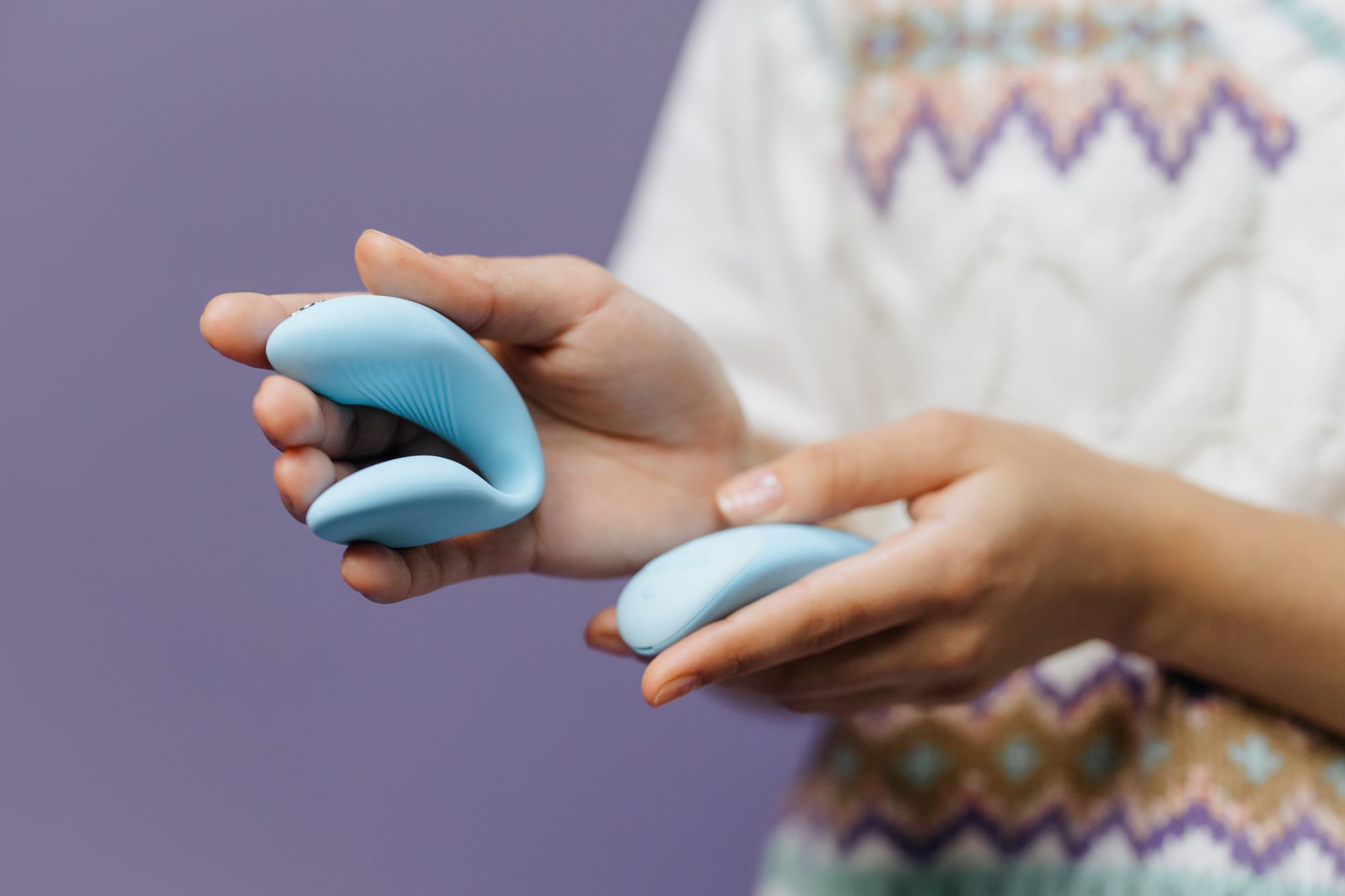
Begin with the lowest setting on the Lem or whichever lemon sexual toy you're using. Notice the sensation without expectation. If you orgasm in five minutes, that's a win. If it takes thirty, that's also a win. If you don't orgasm at all, that's still data. The point is rebuilding the link between stimulation and sensation without the performance narrative.
Many people in this situation have lost the ability to orgasm without anxiety present. You need to rewire that. Think of it like learning to speak when you've been holding your breath. You have to practice breathing first.
Introducing the vibrator to partnered time (carefully)
Once you can reliably pleasure yourself with the lemon clitoral vibrator alone, the next phase is integration, not replacement.
Talk to your partner before bringing the toy into the bedroom. This conversation is crucial and often the biggest tension point. Here's the frame I recommend: "I want to feel more connected to my own pleasure. Using this tool helps me do that. It's not about you or what you're doing. It's about me reclaiming something that got lost." If they hear it as a criticism of their technique, redirect: "This is for me, not against you."
Start with you controlling the toy while they're present but not actively involved. They can be close. They can touch you elsewhere. But the vibrator is your tool, your pace, your rhythm. This boundary matters. The moment they take control of the device, you're back in performance mode.
Your partner needs to understand: their job is not to make you orgasm. Their job is to witness your pleasure without expectation. That's the actual intimacy.
Many people think a lemon vibrator in partnered sex means the partner feels inadequate. The opposite is often true. When you're orgasming with reliable access to your own pleasure, the entire dynamic shifts. You're not anxious. You're present. You're enjoying them, not managing their expectations.
What actually changes when you reclaim your body
Once you've rebuilt the solo-pleasure pathway and learned to maintain that autonomy while your partner is present, something shifts neurologically. Your body starts to associate their presence with safety instead of scrutiny.
You might find you can orgasm with them present while using the lemon clitoral vibrator, then gradually orgasm with other stimulation too. Or you might find that you prefer the vibrator during partnered sex permanently. Both are fine. The goal is choice, not performance.
Something else happens: your partner often becomes more attracted to you. Not because the toy is "hotter." Because you're not anxious. Anxiety is the opposite of sexy. Confidence in your own body, agency over your own pleasure, a nervous system that's regulated instead of strung tight. That changes the entire tenor of intimacy.
The conversation about what this means for them
If your partner has been experiencing your orgasm block as a personal failure, this reclamation work can sometimes trigger insecurity. They might feel replaced by the vibrator. They might feel like they're "not enough."
This is where the relational work matters. You might say: "I'm not being pleasured by this instead of by you. I'm being pleasured by me, with you present. That's actually a form of vulnerability. I'm trusting you to see me prioritize my own body while you're here." That's intimate in a way that performance orgasms never are.
If they cannot get to a place where your autonomous pleasure feels safe to them, that's diagnostic information. Not a dealbreaker necessarily, but worth exploring with a couples therapist or relationship coach. Sometimes the partner's discomfort has nothing to do with the vibrator and everything to do with control, or their own insecurity, or patterns they haven't examined.
Practical settings for the lemon vibrator in this context
When you're ready to integrate the lemon adult toy into partnered sex, here's what I recommend:
Start with a setting that feels effective when you're alone, maybe one or two notches lower. Your nervous system is still partially in alert mode, so you might need slightly less intensity to override the background anxiety. If the Lem is your tool, you might drop from your solo setting (say, pattern 5) to pattern 3 or 4 initially.
Time matters. The longer the foreplay, the more your parasympathetic nervous system can activate. Don't expect to orgasm with the vibrator in the first minute of contact. Give yourself ten to fifteen minutes minimum of build-up before you even introduce the device.
Your partner's attention during this time should be diffused, not laser-focused on your orgasm. They can be inside you, or beside you, or touching your skin, but they should not be asking, "Are you close?" or monitoring your facial expressions. That monitoring is the thing that kills it every single time.
Rebuilding trust after the pressure has damaged the relationship
If the partner pressure has been going on for months or years, there's often a layer of resentment underneath the physical block. You might resent them for making sex feel like work. They might resent you for "not trying hard enough" or being "broken." Neither is true, but the feelings are real.
This is where a couples therapist becomes valuable. A good one can help you both understand that the orgasm block is a symptom, not the problem. The problem is usually a deeper rupture in how you experience autonomy, desire, or being seen in the relationship.
Using a lemon clitoral vibrator to rebuild pleasure is the somatic part of that repair. But it works best alongside actual conversation about what created the pressure in the first place. If your partner's needs have been running your sexuality for years, that's something to grieve and address, not just work around.
People also ask
Why can't I orgasm with my partner but I can alone with my vibrator?
Your nervous system is reading your partner's presence as a potential threat to safety, even though you love them. When you're alone with a lemon vibrator, there's no external observation, no performance expectation, and no one else's needs to manage. Your body relaxes. Orgasm requires a relaxed nervous system. Once you prove to yourself that your body can do this, you can gradually extend that safety to include their presence.
Does using a lemon clitoral vibrator mean my partner isn't satisfying me?
No. A lemon vibrator is not a replacement for your partner. It's a tool that helps you access your own pleasure reliably, which is your birthright regardless of who's in the room. Many people use clitoral vibrators with partners present specifically because it removes the pressure for the partner to "do it right." Your pleasure becomes collaborative instead of his or her responsibility.
How do I tell my partner I want to use a vibrator without making them feel bad?
Frame it as reclaiming something, not criticizing them. Try: "I've realized I get in my head during sex and it blocks me from feeling good. Using this lemon adult toy helps me focus on my body instead of my thoughts. I want to try it with you here so I can actually be present with you." Most partners respond well to a framing that positions the vibrator as a solution, not a judgment.
Can I ever orgasm without the vibrator if I get used to it?
Yes, though it might take time. Once you rebuild the neural pathway of pleasure and your nervous system trusts that you're safe with your partner present, many people find they can orgasm through other stimulation too. But honestly? If the vibrator is what gets you there reliably, keep using it. Your pleasure doesn't have an expiration date on needing tools.
What if my partner refuses to accept the vibrator?
That's worth taking seriously. A partner who cannot accept your autonomous pleasure is showing you something important about how they relate to your body and your needs. A conversation with a couples therapist can help, but ultimately, your right to your own orgasm comes before their comfort with it.
How long does it take to rebuild pleasure after partner pressure?
It depends on how long the pressure was running and how much resentment has built up. The somatic part, rebuilding solo orgasm capacity with a lemon clitoral vibrator, usually takes two to four weeks. The relational repair can take longer. Be patient with yourself and with the process.
The thing nobody tells you
Your orgasm is not a gift you give your partner. It's not proof that they're a good lover. It's not a performance metric or a measure of how much you love them. It's a physiological response that belongs entirely to you. The moment you reclaim that, everything changes. Your body remembers what pleasure feels like. Your nervous system relaxes. And paradoxically, partnered sex often becomes better because you're not anxious.
Start solo. Rebuild the foundation. Then bring your partner into a space where your pleasure is yours to own. That's when real intimacy begins.
If you're struggling with this and need personalized support, reach out to a relationship coach or therapist who understands the intersection of sex, nervous system regulation, and relational dynamics. You deserve pleasure that doesn't come packaged with guilt or performance anxiety.